Bretton Woods and the 1971 Closing of the Gold Window
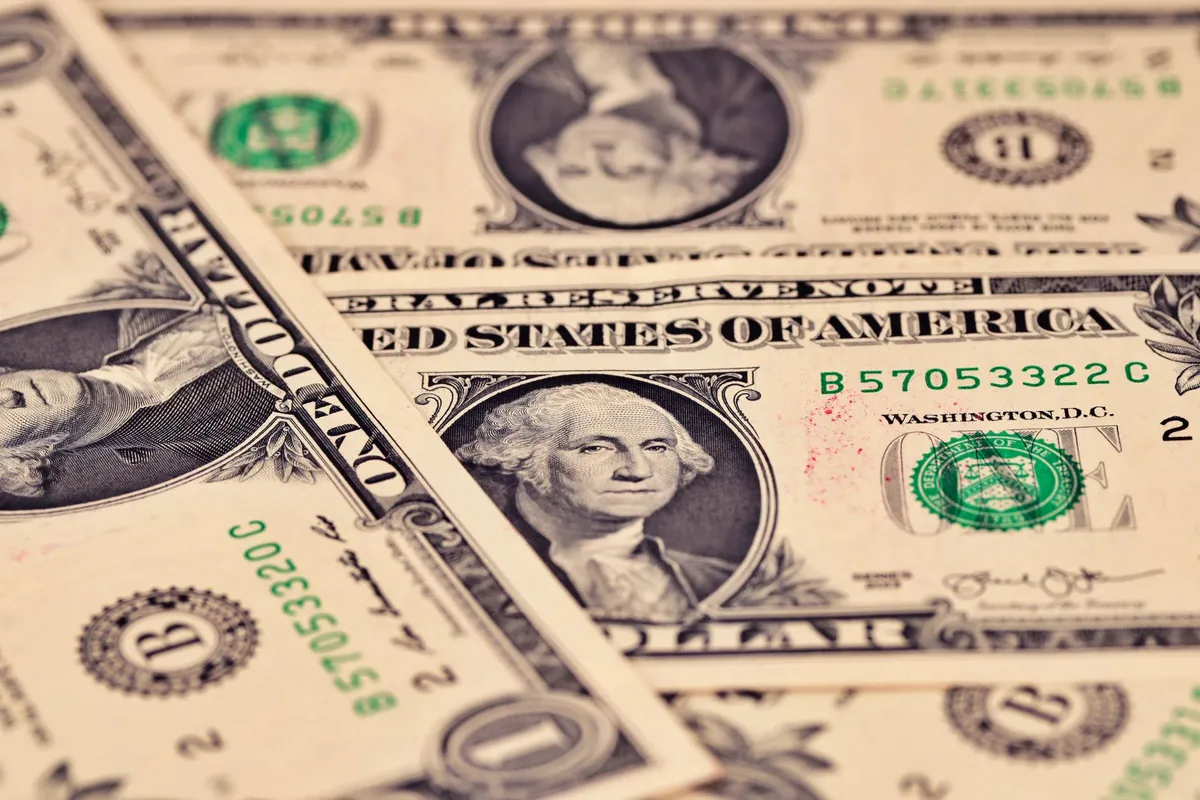
After the Second World War, the world’s monetary system was rebuilt around a single idea: other currencies would be pegged to the US dollar, and the dollar would be tied to gold. For about a quarter of a century this arrangement, named after the New Hampshire resort where it was negotiated, anchored international finance. Its end in 1971 opened the era of floating currencies and free gold prices that we still live in.
The 1944 conference
In July 1944, delegates from 44 allied nations met at Bretton Woods, New Hampshire. Their aim was to avoid a repeat of the 1930s, when competitive devaluations, trade barriers and the collapse of the gold standard had deepened the Depression. The two leading figures were John Maynard Keynes for Britain and Harry Dexter White for the United States.
The conference created two institutions that still exist, the International Monetary Fund and the International Bank for Reconstruction and Development, part of today’s World Bank. It also set the rules of a new currency system.
How the system worked
- Each member country set a par value for its currency in terms of the dollar or gold, and committed to keep its exchange rate within a narrow band around it.
- The United States undertook to convert dollars held by foreign official institutions, mainly central banks, into gold at $35 per troy ounce, the price fixed in 1934.
- Private citizens could not convert dollars into gold at the US Treasury, and Americans were not allowed to hold gold bullion at the time.
- Par values could be changed to correct a “fundamental disequilibrium”, with IMF involvement.
The dollar thus became the main reserve currency, “as good as gold” for central banks. The background to the $35 price is told in The 1933 Gold Recall and the Gold Reserve Act.
Strains in the 1960s
The system rested on confidence that the United States could always honour the $35 promise. Over the 1950s and 1960s, dollars accumulated abroad as the US ran balance-of-payments deficits, while American gold reserves fell. Foreign dollar holdings eventually exceeded the gold available to back them, a problem described by the economist Robert Triffin and known as the Triffin dilemma: the world needed more dollars for trade and reserves, but the more dollars there were, the less credible their convertibility became.
Several measures tried to hold the line:
- The London Gold Pool, formed in 1961 by the United States and several European central banks, sold gold on the London market to keep the private price close to $35.
- The two-tier market replaced the pool in March 1968, after heavy buying drained its reserves. Official transactions between central banks stayed at $35, while the private market price was allowed to float.
- Special Drawing Rights were created by the IMF in 1969 as a supplementary reserve asset.
August 15, 1971
By 1971, pressure on the dollar was intense. On 15 August, President Richard Nixon announced that the United States would suspend the convertibility of the dollar into gold for foreign official holders. The announcement, made with wage and price controls and a temporary surcharge on imports, became known as the Nixon shock.
From Smithsonian to floating rates
In December 1971, the major countries tried to repair the system with the Smithsonian Agreement, which devalued the dollar and widened the bands around new parities. The official gold price was raised to $38, and later to $42.22 in 1973. But convertibility never returned. In early 1973, the main currencies began to float against each other, and in 1976 the Jamaica Accords amended the IMF’s rules to recognise floating exchange rates and reduce gold’s official role.
| Date | Event |
|---|---|
| July 1944 | Bretton Woods conference |
| 1961 | London Gold Pool formed |
| March 1968 | Two-tier gold market replaces the pool |
| 15 August 1971 | Gold convertibility suspended |
| December 1971 | Smithsonian Agreement |
| 1973 | Major currencies float |
| 1976 | Jamaica Accords |
What it meant for gold
Once the official link was broken, gold’s price was set by the market. Combined with high inflation in the 1970s and, from the end of 1974, the right of Americans to own gold again, this produced the great bull market of that decade. Since then, gold has traded freely, reacting to interest rates, the dollar and demand, as explained in What Moves Gold Prices.
Central banks still hold large amounts of gold, a legacy of the Bretton Woods era and earlier, discussed in Central Banks and Gold. For the classical system that came before, see The Classical Gold Standard.
This article may contain partner links. They never influence what we write.