90% Silver Coin Bags: Pre-1965 US Dimes, Quarters and Halves
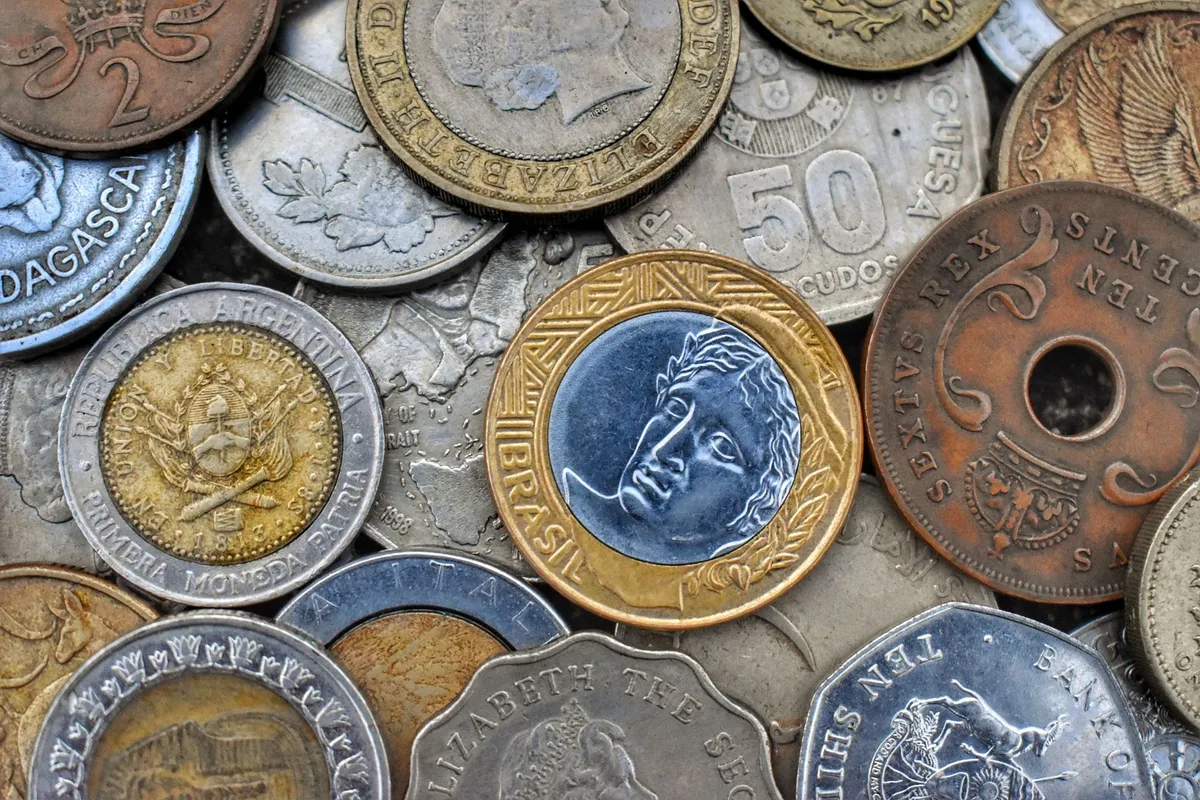
Long before modern bullion coins existed, Americans who wanted to hold silver had an obvious option: the dimes, quarters and half dollars in their pockets. Until the mid-1960s these coins were made of 90% silver. Today they trade as “junk silver” or “constitutional silver”, valued for their metal content rather than their rarity. They are among the most widely recognized forms of silver bullion in the United States.
Which coins qualify
US dimes, quarters and half dollars dated 1964 and earlier were struck in an alloy of 90% silver and 10% copper. The Coinage Act of 1965 removed silver from dimes and quarters and reduced it in half dollars, because the rising value of silver was making the coins worth more as metal than as money.
Common designs found in 90% bags include:
- Dimes: Mercury (Winged Liberty) and Roosevelt dimes through 1964.
- Quarters: Washington quarters through 1964, plus older Standing Liberty and Barber quarters.
- Half dollars: Walking Liberty, Franklin and the 1964 Kennedy half.
Bags are usually sold by denomination (all dimes, all quarters, or all halves) or as mixed lots. Older designs sometimes carry a small premium, and coins with genuine numismatic value are normally picked out before coins reach bullion bags.
How much silver is in $1 face value
The US Mint designed these coins so that silver content was proportional to face value. Any combination of dimes, quarters and halves adding up to $1 contains the same amount of silver.
| Coin | Silver content when new |
|---|---|
| Dime | 0.07234 troy oz |
| Quarter | 0.18084 troy oz |
| Half dollar | 0.36169 troy oz |
| $1 face value (any mix) | 0.7234 troy oz |
Coins that circulated for decades lost a little metal to wear. The market convention is therefore to value $1 face value of circulated 90% coins at about 0.715 troy ounces of silver, rather than the 0.7234 ounces of a new coin.
The $1,000 face bag
The classic trading unit is the “$1,000 face bag”: coins with a total face value of $1,000, for example 10,000 dimes, 4,000 quarters or 2,000 half dollars. Using the 0.715 convention, such a bag holds roughly 715 troy ounces of silver. Smaller units of $100, $250 or $500 face value are common for buyers who do not want a full bag, and dealers also sell rolls and small lots.
Prices are typically quoted as a multiple of face value, or as the spot value of the silver content plus a premium. Converting both to a price per ounce of silver content is the simplest way to compare offers with modern bullion coins. For context on what drives the metal itself, see what moves silver prices.
Advantages
- Divisibility. A single dime holds well under a tenth of an ounce of silver, which makes it easy to sell or trade very small amounts without cutting into a larger bar.
- Recognition. The coins are familiar to dealers across the United States and are hard to counterfeit economically, since their low value makes faking them unrewarding.
- Government-defined content. Weight and fineness were set by law, so buyers do not need to rely on a private refiner’s stamp.
- Premiums. Depending on market conditions, premiums per ounce can be competitive with or lower than those on newly minted bullion coins, though they vary considerably.
Drawbacks
- Bulk. A full bag is heavy and needs secure space. See how to store bullion for options.
- Wear and uncertainty. Heavily worn coins contain less silver. The 0.715 convention is an average, not a guarantee for any given bag.
- Counting and handling. Thousands of small coins take time to count and verify, both when buying and when selling.
- Fluctuating premiums. The premium on 90% coins can swing sharply, rising in periods of strong retail demand and shrinking when demand is quiet.
- Less recognized outside the US. International buyers may prefer modern bullion coins or bars.
The 40% contrast: Kennedy halves 1965–1970
After 1964, dimes and quarters became copper-nickel clad coins with no silver. The Kennedy half dollar was treated differently: from 1965 through 1970 it was struck with an outer layer of 80% silver bonded to a core of about 21% silver, giving an overall fineness of 40%. Each of these halves contains about 0.1479 troy ounces of silver, far less than the 0.36169 ounces of a pre-1965 half.
These 40% halves are traded as a separate category and must not be mixed with 90% coins when calculating silver content. From 1971 on, circulating Kennedy halves contain no silver at all, apart from special collector issues.
Before you buy
- Confirm whether a lot is 90% or 40% silver, and whether it is priced on new or worn content.
- Compare the price per ounce of silver content with other bullion options.
- Check that dates are 1964 or earlier for 90% dimes, quarters and halves.
- Plan storage before buying a full bag.
- Remember that silver prices fluctuate; nothing here is a recommendation to buy or sell.
- For how silver compares with gold in a broader holding, see gold vs silver.
This article may contain partner links. They never influence what we write.