Gold vs Silver: How the Two Precious Metals Really Differ
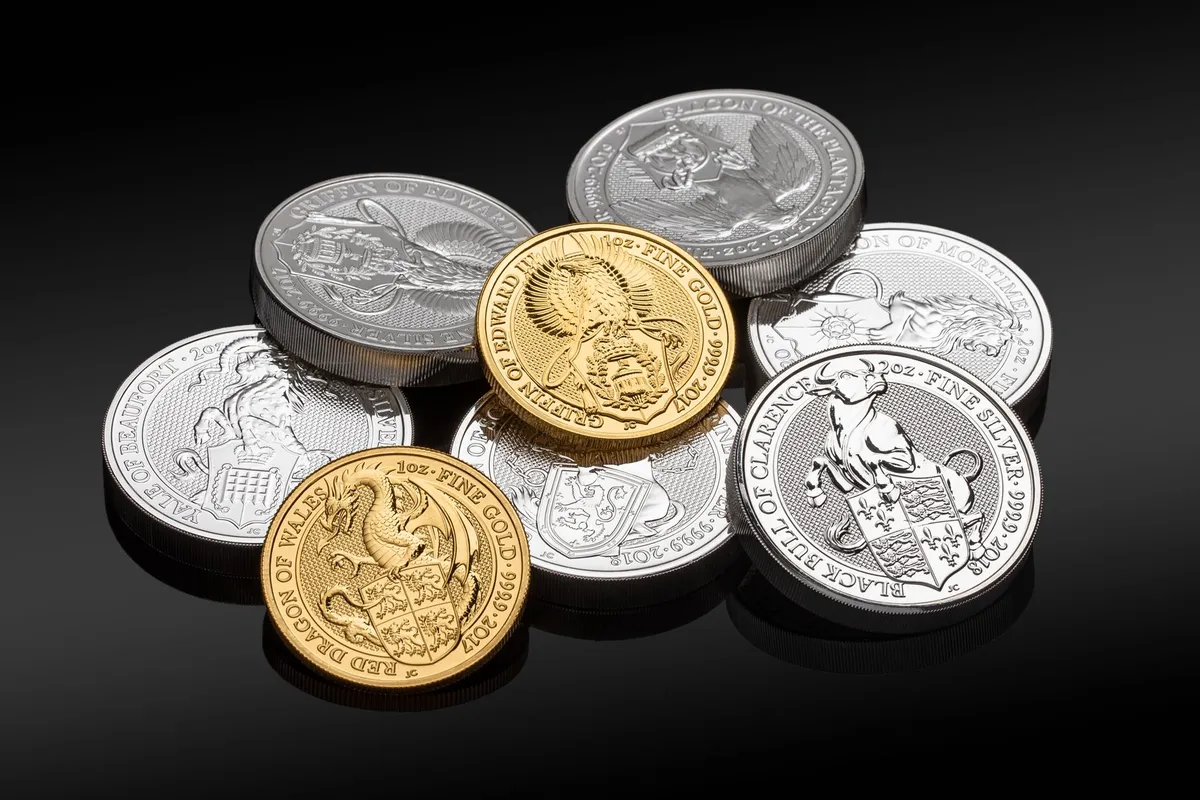
Gold and silver are usually mentioned in the same breath, sold by the same dealers and quoted on the same screens. Yet they are not two versions of the same asset. Gold behaves mainly as a monetary metal, held by central banks and private savers as a store of value. Silver carries a monetary history too, but a large share of every year’s supply disappears into industry. That difference shapes how each metal moves, how it is stored and what it costs to own.
Two metals, two jobs
Gold’s demand base is dominated by jewelry, investment bars and coins, and central-bank reserves. Its industrial uses, in electronics and dentistry, are real but small. Because almost all the gold ever mined still exists in some form above ground, annual mine output is only a modest addition to a very large stock. That stock-to-flow profile is one reason gold tends to trade like a currency rather than a commodity.
Silver is different. Roughly half of annual demand comes from industrial applications: electrical contacts, conductive pastes for solar photovoltaic cells, brazing alloys, chemical catalysts and medical uses. Much of that silver is used in tiny quantities and never economically recovered. Silver therefore answers to two masters at once: the investment mood that also drives gold, and the business cycle that drives factory orders. The details are covered in what moves silver prices and what moves gold prices.
Volatility
Silver is the more volatile of the two, often by a wide margin. Its market is far smaller in dollar terms, so a given flow of money into or out of it has a larger effect on price. Its industrial exposure adds a second source of swings during recessions and recoveries.
History shows the pattern clearly. Silver reached about $50 an ounce in January 1980 and again in April 2011, and in both cases it gave back a large part of those gains within a few years. Gold also rose and fell over the same periods, but its moves in percentage terms were generally less extreme. Holders of silver should expect sharper rallies and deeper drawdowns than holders of gold.
Storage bulk and handling
Because an ounce of gold is worth many times an ounce of silver, the same dollar amount of silver takes up much more space and weighs much more. Silver is also less dense than gold (about 10.5 g/cm³ against about 19.3 g/cm³), which adds to the bulk.
| Factor | Gold | Silver |
|---|---|---|
| Value per ounce | High | Much lower |
| Space for a given sum | Small | Many times larger |
| Tarnish | Does not tarnish | Tarnishes over time |
| Typical shipping and vault cost per dollar held | Lower | Higher |
A sum that fits in a small envelope as gold coins can fill a heavy box as silver. That matters for home safes, safe deposit boxes and vault fees, which are often charged by value but sometimes by weight or volume. See how to store bullion for the practical side.
Premiums and costs of ownership
The premium is what a buyer pays above the spot value of the metal content. It covers fabrication, distribution, dealer margin and, at times, scarcity of a particular product.
- Gold premiums on common bullion coins and bars are usually small as a percentage, because fabrication costs are spread over a high-value item.
- Silver premiums are usually much higher as a percentage. Minting a one-ounce silver coin costs roughly as much as minting a one-ounce gold coin, but the metal inside is worth far less.
- Sales taxes may apply differently to each metal depending on the jurisdiction, and some places exempt one and not the other.
Higher premiums on silver mean the price has to rise further before a buyer breaks even after selling back at the dealer’s bid.
Liquidity
Both metals are liquid in the sense that recognized coins and bars can be sold quickly to dealers worldwide. Gold has the edge at scale: large sums can be moved in a few bars, and the global gold market trades enormous volumes every day in London, New York, Zurich, Shanghai and elsewhere. Silver is liquid for ordinary amounts, but selling a large holding means shipping or delivering a lot of metal, and bid-ask spreads tend to be wider.
On the other hand, silver’s lower value per unit makes it easier to sell in small pieces. A one-ounce silver coin or a handful of 90% silver coins can be sold without parting with a large sum at once.
How people tend to split holdings
There is no correct ratio between the two metals, and nothing here is personal advice. Still, a few common approaches show up repeatedly among people who hold both:
- Gold as the core, silver as a satellite. Gold is treated as the steadier store of value, with a smaller silver position for its higher volatility and industrial exposure.
- Splitting by storage capacity. Some holders keep silver at home for small transactions and divisibility, and store gold elsewhere because of its value density.
- Rebalancing on the ratio. Others watch the gold-silver ratio and shift between the two metals when it reaches levels they consider stretched.
Each approach has trade-offs, and the right mix depends on budget, storage, time horizon and tolerance for price swings.
Key points
- Gold is mostly a monetary and investment metal; silver is both monetary and industrial.
- Silver is usually more volatile, in both directions.
- Silver needs far more space and usually carries higher percentage premiums.
- Gold is more efficient for large sums; silver is easier to divide into small amounts.
- Owning both is common, but the split is a personal decision, not a formula.
This article may contain partner links. They never influence what we write.